
Outdoor Power Equipment
ECHO 2 Stroke Oil: 50:1 Mix Ratio, Types, and Proper Use
Learn the correct ECHO 2 stroke oil ratio, compare PowerBlend Gold and Red Armor, follow a 50:1 mixing chart, and avoid common fuel mistakes.

Using the right ECHO 2 stroke oil is less complicated than it may first appear. Many current ECHO two-stroke engines use a 50:1 fuel-to-oil ratio, equal to 2.6 fluid ounces of suitable two-cycle oil per US gallon of gasoline. However, the operator’s manual for your exact model remains the final authority, especially for older equipment. Oil choice matters because a two-stroke engine has no separate crankcase oil supply. Its internal parts depend on oil carried through the engine with the gasoline. An incorrect ratio, unsuitable marine oil, stale gasoline, or poorly mixed fuel can lead to carbon deposits, hard starting, overheating, piston scoring, or engine failure. This guide explains the correct measurements, mixing method, fuel requirements, and differences between ECHO PowerBlend Gold and Red Armor.
Quick Answer
Most current ECHO two-stroke equipment uses a 50:1 gasoline-to-oil ratio. Mix 2.6 fluid ounces of JASO FD and ISO-L-EGD-rated air-cooled two-stroke oil with one US gallon of fresh 89-octane or higher gasoline. Confirm the ratio in your model’s operator’s manual before mixing, particularly if you own older equipment.
What Is ECHO 2-Cycle Oil?
ECHO 2-cycle oil is formulated to lubricate air-cooled, gasoline-powered two-stroke engines. The terms two-cycle and two-stroke describe the same basic engine design and are commonly used interchangeably. Unlike a four-stroke engine, which keeps motor oil in a separate crankcase, a conventional two-stroke engine receives lubrication through its fuel. The oil and gasoline are mixed before being poured into the fuel tank. As this premix moves through the engine, the oil helps protect the piston, cylinder wall, piston rings, crankshaft bearings, and other internal components. The oil is eventually burned with the gasoline. This total-loss lubrication system makes the oil formula and fuel-to-oil ratio particularly important. Too little oil may leave metal surfaces without adequate protection. Too much can contribute to smoke, deposits, spark plug fouling, and restricted exhaust flow. ECHO sells two prominent oil options for this purpose:
- PowerBlend Gold, a semi-synthetic, low-smoke formula for air-cooled outdoor power equipment
- Red Armor, a premium formula with a stronger emphasis on detergency and carbon-deposit control Both are intended for equipment such as chainsaws, string trimmers, brush cutters, leaf blowers, hedge trimmers, edgers, pole saws, augers, and engine drills when the machine specifies a compatible premixed two-stroke fuel.
ECHO 2 Stroke Oil Mix Ratio and Measurement Chart
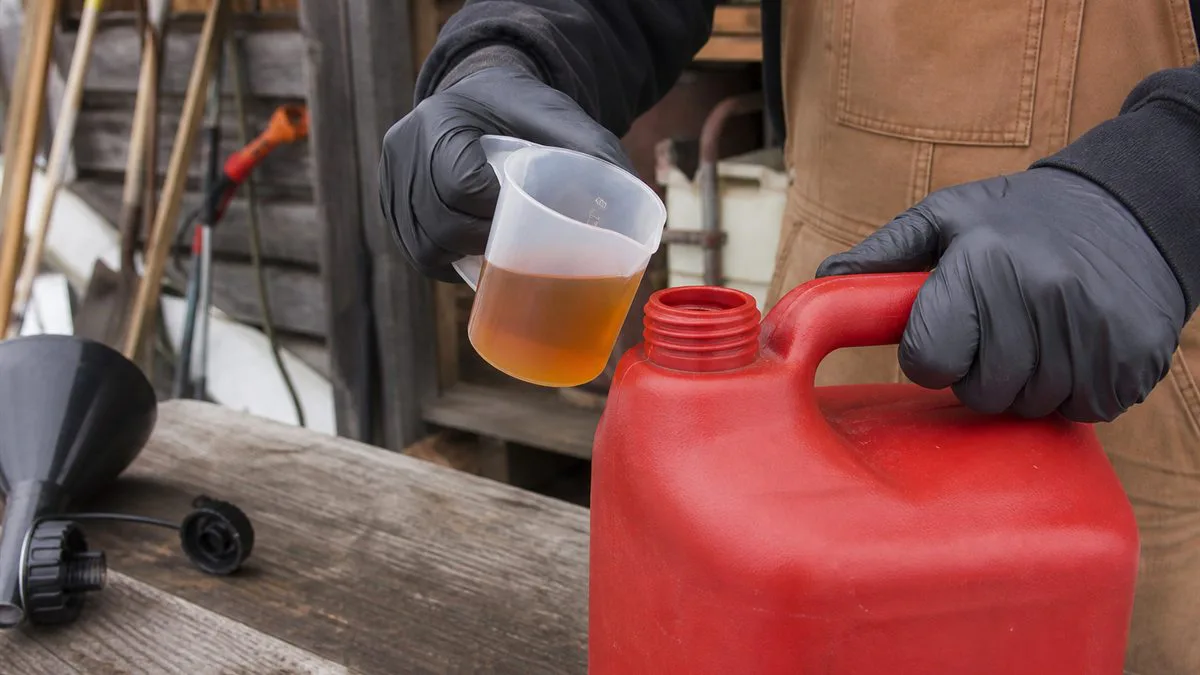
A 50:1 ratio means 50 parts gasoline to one part oil by volume. It does not mean adding 50 ounces of gasoline to one ounce of oil unless you are deliberately making a very small batch. Use this formula when the oil amount is not already shown on the bottle: Oil required = gasoline volume ÷ 50 The units must match. For example, one US gallon contains 128 fluid ounces: 128 fl oz ÷ 50 = 2.56 fl oz of oil That result is normally rounded to 2.6 fluid ounces, which is why ECHO sells single-use 2.6-ounce bottles for a one-gallon mix.
| Gasoline | Two-stroke oil at 50:1 |
|---|---|
| 1 US gallon | 2.6 fl oz |
| 2 US gallons | 5.1–5.2 fl oz |
| 2.5 US gallons | 6.4 fl oz |
| 5 US gallons | 12.8 fl oz |
| 1 liter | 20 ml |
| 5 liters | 100 ml |
| 10 liters | 200 ml |
| For two US gallons, the exact mathematical amount is 5.12 fluid ounces. A premeasured 5.2-ounce bottle is close enough for the intended commercial mixing format. | |
| Do not change a specified 50:1 ratio to 40:1 or 32:1 based on an online recommendation. More oil does not automatically provide better protection. The carburetion, combustion system, exhaust design, oil specification, and warranty requirements all matter. Follow the ratio printed in the current manual for your equipment. |
Choosing the Right Gasoline
Oil is only half of a reliable fuel mixture. Gasoline quality and age can also affect starting, combustion, carburetor operation, and storage life. ECHO’s current chainsaw support guidance calls for fresh, good-quality gasoline purchased within the previous 30 days. It specifies 89 octane or higher, measured by the US pump method of (R+M)/2, also called AKI. The guidance permits up to 10% ethanol or 15% MTBE but does not approve gasoline containing methanol. For a typical current machine, that means:
- Use fresh 89-octane or higher unleaded gasoline.
- Avoid fuel containing more than 10% ethanol.
- Do not use E15 or E85 unless a particular manual explicitly allows it.
- Keep dirt, water, and grass clippings out of the gas can.
- Buy only an amount you can use within a practical storage period.
- Check the manual because instructions can vary by model and market. Ethanol-free gasoline can reduce some moisture-related and storage concerns, but its availability and octane rating vary. It is not a substitute for correct oil measurement, clean containers, or sensible storage. Gasoline sold outside the United States may display Research Octane Number rather than AKI. Do not compare those numbers directly without accounting for the different rating method. Follow the local manual for the machine and fuel sold in your region.
How to Mix ECHO Two-Stroke Fuel Correctly
Mix the fuel in an approved portable gas container, not inside the equipment’s tank. A separate container allows the gasoline and oil to combine evenly and reduces the chance of a concentrated pocket of oil reaching the carburetor.
- Check the manual and container label.
Confirm that the machine requires 50:1 fuel and that the oil meets the specified performance standards. - Move to a ventilated location.
Mix outdoors, away from flames, cigarettes, heaters, sparks, hot engines, and other ignition sources. - Use a clean, approved fuel can.
Make sure it is intended for gasoline and contains no water, dirt, diesel fuel, or an unknown old mixture. - Add about half the gasoline.
Starting with part of the gasoline leaves room for the oil to disperse when the container is shaken. - Measure and add the oil.
For one US gallon at 50:1, add 2.6 fluid ounces. A single-use bottle avoids measuring errors; a squeeze bottle with a graduated chamber is practical for larger batches. - Close and agitate the container.
Secure the cap and gently shake the can so the oil begins mixing with the gasoline. - Add the remaining gasoline.
Close the container again and shake it thoroughly. - Label the mixture.
Mark it as two-stroke premix and include the ratio and mixing date. This prevents someone from pouring it into a four-stroke machine or mistaking it for straight gasoline. Let a hot engine cool before refueling. Open the fuel cap slowly, avoid overfilling, and wipe up spills promptly according to the product label and local requirements. Never start the machine in the immediate spill area.
PowerBlend Gold vs. Red Armor
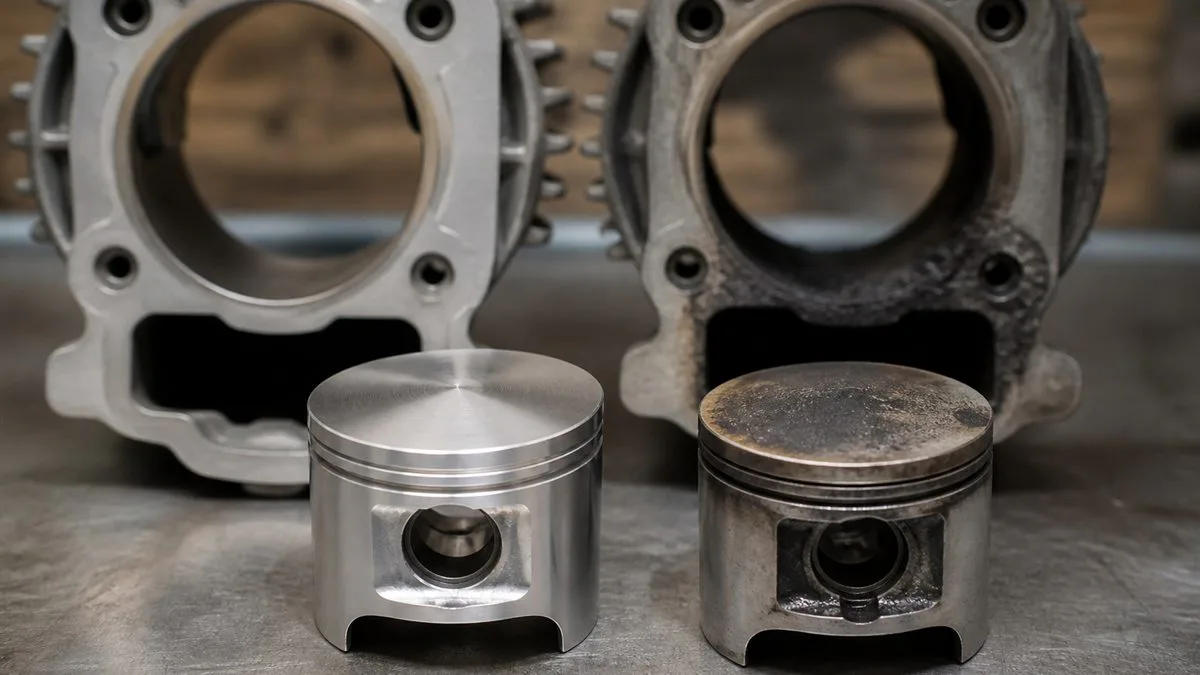
Both products can serve the same basic role, but they target somewhat different priorities. PowerBlend Gold is the straightforward semi-synthetic option, while Red Armor emphasizes deposit cleaning and protection for demanding or repeated use.
| Feature | ECHO PowerBlend Gold | ECHO Red Armor |
|---|---|---|
| Basic formulation | Semi-synthetic blend | Premium proprietary formula with detergents, additives, and antioxidants |
| Normal mix ratio | 50:1 when specified by the equipment | 50:1 when specified by the equipment |
| Oil standards | JASO FD and ISO-L-EGD | JASO FD and ISO-L-EGD |
| Main focus | Lubrication, low smoke, corrosion protection, and cleaner operation | Lubrication plus stronger emphasis on cleaning and controlling carbon deposits |
| Typical user | Homeowners and general equipment users | Frequent users, professionals, or owners concerned about deposits |
| Fuel stabilization | Included; PowerBlend product information commonly describes shorter-term fuel protection | Marketed for extended fuel stability when mixed with fresh gasoline and stored properly |
| Cost position | Usually the lower-cost ECHO option | Usually priced as the premium option |
| Available formats | Premeasured bottles, measuring bottles, and commercial quantities depending on market | Premeasured and measuring bottles, plus premixed Red Armor Fuel |
| ECHO identifies PowerBlend Gold as a semi-synthetic oil rated JASO FD and ISO-L-EGD. Retail product information also describes detergents, a fuel stabilizer, low-smoke operation, and protection against wear, rust, corrosion, and exhaust-port blockage. | ||
| ECHO describes Red Armor as using proprietary detergents, additives, and antioxidants to clean existing carbon deposits and help promote engine life. That makes it attractive for equipment used often or under sustained load. It should not be treated as a repair product, however. Oil cannot reverse piston scoring, restore worn bearings, or correct a damaged carburetor. | ||
| Fuel-stability claims require careful reading. Red Armor oil is marketed for much longer stabilization than PowerBlend Gold when added to fresh gasoline, but storage conditions still matter. Temperature, ethanol content, moisture, container seal, initial fuel quality, and equipment-manufacturer instructions can all shorten practical storage life. Check the current bottle label instead of assuming every ECHO oil provides the same storage period. |
Which one should you buy?
PowerBlend Gold is a reasonable choice for routine homeowner use when you mix small, fresh batches and use them promptly. Red Armor may justify its higher price for commercial crews, frequent operation, or engines prone to deposit-related service. The oil should still be selected by specification before price. A correctly mixed, approved oil used with clean, fresh gasoline is more valuable than a premium oil placed in stale fuel or measured inaccurately.
Why JASO FD and ISO-L-EGD Matter
A label saying “two-cycle oil” does not by itself establish that the oil is appropriate for a modern air-cooled engine. ECHO’s support guidance requires oil meeting JASO M345 FD and ISO-L-EGD, also referenced as ISO/CD 13738. These classifications evaluate performance areas such as lubrication, detergency, smoke, and deposit control. ECHO warns that engine problems caused by inadequate lubrication from oil that does not meet the required standards can affect warranty coverage. JASO FD is a higher-detergency category within the JASO M345 system. ISO-L-EGD is also intended for demanding two-stroke applications. Their appearance on the bottle gives the owner a more useful compatibility check than color, brand reputation, or a vague “universal” claim. API TC may appear on some two-stroke oils, but ECHO’s current guidance specifically identifies JASO FD and ISO-L-EGD. Select the standards required in your manual rather than assuming an older or different classification is equivalent. ECHO-branded oil is not necessarily the only oil that can work in every situation. A suitable aftermarket product may be acceptable if it meets the required standards, is intended for air-cooled two-stroke engines, and is used at the ratio specified by the equipment manufacturer. Warranty language and regional manuals should still be checked before substitution.
Can ECHO Oil Be Used in STIHL or Husqvarna Equipment?
ECHO oil may be suitable for certain STIHL, Husqvarna, Shindaiwa, and other air-cooled two-cycle engines, but compatibility must be determined from the receiving machine’s requirements. Check three points:
- Does the other engine require premixed two-stroke fuel?
- Does the oil meet or exceed the standards listed in that machine’s manual?
- Are you using the ratio required by that machine? The oil brand does not change an engine’s prescribed ratio. If a STIHL tool calls for 50:1, mix it at 50:1. If an older machine legitimately specifies another ratio, follow that manual rather than changing it because the ECHO bottle is packaged for a one-gallon 50:1 mixture. Do not combine two oils simply because both are two-stroke products. If you are changing oils and the contents of the can are unknown, it is safer to prepare a clearly labeled batch from fresh gasoline and one suitable oil.
Marine Oil Is Not a Direct Substitute
Oil for a water-cooled outboard engine operates under different thermal and combustion conditions from oil in a high-speed air-cooled chainsaw, blower, or trimmer. Marine oils commonly carry the NMMA TC-W3 specification. That standard serves water-cooled marine applications; it is not the same as JASO FD or ISO-L-EGD for air-cooled equipment. A product labeled only TC-W3 should not automatically be used in an ECHO air-cooled engine. Use an oil whose label clearly meets the air-cooled two-stroke standards required by the machine. An oil may carry multiple suitable approvals, but the presence of “2-cycle” on the front label is not enough. Check the technical specifications on the back label or manufacturer’s documentation.
Common Mixing Errors and What They Cause
An engine that smokes, loses power, or becomes difficult to start does not always have an oil-ratio problem. A dirty air filter, restricted spark arrestor, worn spark plug, poor carburetor adjustment, stale fuel, or mechanical damage can create similar symptoms. Still, an incorrect mixture is one of the first items worth checking.
Too much oil
An oil-rich mixture may cause:
- Excessive blue or gray exhaust smoke
- Oily residue near the muffler
- Spark plug fouling
- Increased carbon deposits
- A restricted spark arrestor screen or exhaust port
- Rough running or reduced power These symptoms do not justify diluting fuel by guessing. If the ratio is unknown or clearly incorrect, dispose of the mixture according to local hazardous-waste rules and prepare a measured batch.
Too little oil
An oil-lean mixture is usually the more dangerous mistake because the engine may not receive adequate lubrication. Possible effects include:
- Excessive operating heat
- Metallic noise
- Loss of compression
- Piston or cylinder scoring
- Bearing damage
- Sudden seizure
- Shortened engine service life Stop the engine if you suspect straight gasoline or severely under-oiled fuel was added. Continuing to run it may turn a correctable fueling error into permanent mechanical damage.
Fuel Storage and Seasonal Care

Prepare only as much fuel as you expect to use within the period supported by the oil label and equipment manual. Smaller batches are usually easier for homeowners to manage and reduce the amount left at the end of the season. Store premix:
- In a tightly closed, approved fuel container
- In a cool, dry, ventilated location
- Away from direct sunlight and ignition sources
- Outside living areas
- Where children cannot reach it
- With the ratio and mixing date clearly marked Gently agitate a stored container before refueling. Do not rely on color alone to identify its contents because oil dyes and concentration can vary. Year-old mixed fuel should not automatically be poured into an ECHO trimmer, even when the oil contains stabilizer. Stabilizer slows fuel degradation; it does not make contaminated, poorly sealed, or heat-damaged gasoline permanently fresh. Follow the oil label and the storage instructions for your model. For seasonal shutdown, consult the equipment manual. Depending on the model and storage period, the procedure may involve draining the tank safely and running the carburetor dry, or using an approved stabilized fuel. Never dump old premix onto soil, into a drain, or into household trash. Use a local fuel-recycling or household hazardous-waste facility.
Engine Premix Oil Is Not Chainsaw Bar Oil
A chainsaw may require two different oils that perform unrelated jobs:
- Two-stroke engine oil is mixed with gasoline and poured into the fuel tank.
- Bar-and-chain oil goes into the separate oil reservoir and lubricates the guide bar and cutting chain. Do not put bar oil in the gasoline. Its viscosity and additive package are not designed for combustion or internal engine lubrication. Likewise, premix oil is not a practical replacement for tacky bar-and-chain lubricant. Also check the label when buying Red Armor products. ECHO sells oil for two-stroke engines as well as separate four-stroke lubricants. Four-stroke crankcase oil must not be measured into two-stroke gasoline unless a manufacturer specifically identifies that product for premix use—which ordinary four-stroke motor oil is not.
Frequently Asked Questions
How much ECHO two-stroke oil do I add per gallon?
For equipment that specifies a 50:1 ratio, add 2.6 fluid ounces of two-stroke oil to one US gallon of gasoline. Use fresh 89-octane or higher gasoline where required by ECHO’s current guidance. Confirm the ratio for your exact model before mixing.
Can I use 87-octane gasoline with ECHO oil?
Current ECHO US chainsaw guidance specifies fresh 89-octane or higher gasoline. Although an engine may appear to run on 87 octane, that does not make it the manufacturer-approved choice. Follow your model’s manual and the octane-rating system used in your country.
Is ECHO PowerBlend Gold synthetic?
PowerBlend Gold is identified as a semi-synthetic two-stroke oil, not a fully synthetic product. It contains detergents and fuel-stabilizing additives and is rated JASO FD and ISO-L-EGD for air-cooled two-stroke engines.
Is ECHO Red Armor worth the extra cost?
It may be worthwhile for frequent users, commercial operators, or owners prioritizing stronger deposit control. Red Armor emphasizes proprietary detergents that clean existing carbon deposits. PowerBlend Gold remains a suitable, lower-cost choice for many routine applications when mixed correctly with fresh gasoline.
Can I run 40:1 fuel in an ECHO engine rated for 50:1?
Do not deliberately change the ratio unless the operator’s manual or ECHO technical support instructs you to do so. A 40:1 mixture contains more oil than 50:1 and may increase deposits, smoke, and exhaust restrictions without providing a proven benefit for that engine.
Can I use premixed canned fuel in ECHO equipment?
Yes, provided the product has the octane, ratio, and air-cooled oil specification required by the machine. ECHO also sells Red Armor Fuel, an ethanol-free premixed option. Check the can and manual rather than assuming every canned fuel is interchangeable.
Why is my ECHO engine smoking after I mixed the fuel?
Possible causes include excess oil, stale fuel, incomplete combustion, a fouled spark plug, dirty air filter, restricted spark arrestor, or carburetor trouble. Verify the mixture and maintenance condition. Persistent smoke or power loss may require inspection by a qualified small-engine technician.
How long does mixed ECHO fuel last?
The answer depends on the oil formula, gasoline age, ethanol content, temperature, moisture exposure, and container seal. Red Armor and PowerBlend Gold do not necessarily carry identical stabilization claims. Follow the current bottle label, prepare manageable batches, date the container, and avoid using questionable fuel simply because stabilizer was added.
Choosing the Best Option for Your Equipment
For an occasional homeowner, PowerBlend Gold in a premeasured 2.6-ounce bottle makes a one-gallon batch simple and reduces measuring errors. Frequent users may prefer a graduated squeeze bottle. Commercial landscapers who operate equipment for long periods may value Red Armor’s stronger focus on deposit control. Whichever product you choose, the practical priorities remain the same: confirm the manual, use the required JASO FD and ISO-L-EGD oil, start with fresh gasoline of the recommended octane, and measure accurately. Correctly prepared ECHO 2 stroke oil premix protects the engine far more reliably than an expensive oil used with the wrong ratio or deteriorated fuel. ECHO, PowerBlend Gold, and Red Armor are trademarks of their respective owner. Always follow the fuel and lubrication instructions in your equipment’s current operator’s manual.
Mix with confidence
Calculate your exact oil amount
Choose your fuel volume and required ratio to get a precise premix measurement in US or metric units.
Open the mixing calculatorAbout the author


2 Stroke Dirt Bike Oil: Selection, Premix, and Ratio Guide
Choose the correct 2 stroke dirt bike oil for premix or injection, understand key standards, calculate ratios, and prevent common lubrication mistakes.
Read article
2 Cycle vs 2 Stroke: Engines, Oil, and Fuel Explained
Compare 2 cycle vs 2 stroke engines and oils. Learn why the terms are interchangeable and how to choose the correct oil, standard, and fuel ratio.
Read article
Substitute for 2 Stroke Oil: What Is Actually Safe?
Learn what qualifies as a safe substitute for 2 stroke oil, which household fluids to avoid, and how to match oil standards, systems, and ratios.
Read article