
Oil Selection
Best Two Stroke Oil: How to Choose the Right 2T Oil
Find the best two stroke oil for chainsaws, dirt bikes, outboards, and injected engines. Compare oil types, standards, compatibility, and uses.

The best two stroke oil is the product that matches your engine’s cooling system, lubrication method, required certification, and operating conditions. A premium racing oil may suit a high-RPM motocross bike but perform poorly in a lightly loaded trimmer. Likewise, marine oil designed for a water-cooled outboard is not automatically suitable for a hot-running chainsaw. Start with the equipment’s operator’s manual. It should identify the required oil standard, whether the engine uses premix or automatic oil injection, and the correct fuel-to-oil ratio. For many modern air-cooled tools, JASO FD and ISO-L-EGD are useful specifications. Water-cooled outboards commonly require NMMA TC-W3, while direct-injection marine engines may have additional OEM requirements. Once compatibility is confirmed, compare formulation, deposit control, cold-flow performance, packaging, and cost per mixed gallon or liter.
Quick Answer
The right two-stroke oil depends on the application:
- Air-cooled chainsaws, trimmers, and blowers: Look for the specifications required by the manufacturer, commonly JASO FD and ISO-L-EGD.
- Water-cooled outboards: Use NMMA TC-W3 oil or the more specific OEM product required by the engine.
- Motocross and racing engines: Select an approved high-performance premix oil suited to engine speed, load, and power-valve design.
- Oil-injected motorcycles and scooters: Use an injector-safe oil with suitable cold-flow performance.
- Vintage engines: Follow the original or updated model-specific requirements rather than assuming the newest synthetic oil is correct.
Why There Is No Universal Best Two Stroke Oil
Two-stroke engines share a basic lubrication challenge: the oil is consumed during operation instead of remaining in a separate crankcase. Beyond that, their needs vary widely. A chainsaw may operate at high speed with air cooling and rapid temperature changes. A marine outboard runs in a water-cooled environment and faces moisture and corrosion. A motocross engine experiences repeated high-load acceleration, while a trail bike may spend more time at light throttle. An oil-injected scooter also needs a lubricant that flows reliably through its pump, particularly in cold weather. The correct choice depends on:
- Air-cooled or water-cooled operation
- Premix or automatic oil injection
- Engine speed and load
- Oil-pump compatibility
- Required certification
- Fuel-to-oil ratio
- Ambient temperature
- Exhaust and emissions design
- Power-valve construction
- Manufacturer and warranty requirements Oil quality cannot compensate for the wrong specification or an inaccurate mixture. A suitable mid-priced product used correctly is safer than a costly racing oil selected only because it appears more advanced.
Understanding Two-Stroke Oil Standards
Certifications offer a more dependable starting point than bottle color, scent, customer ratings, or broad marketing terms. The operator’s manual determines which standard matters.
| Standard | Typical application | What it helps assess |
|---|---|---|
| JASO FB | Older or basic air-cooled applications | Lubricity, detergency, smoke |
| JASO FC | Lower-smoke air-cooled applications | Lubricity, deposits, exhaust smoke |
| JASO FD | Modern air-cooled two-stroke engines | Lubrication, smoke, cleanliness, higher detergency |
| ISO-L-EGD | Demanding air-cooled applications | Lubricity and strong deposit control |
| API TC | Older general two-stroke classification | Basic two-stroke performance |
| NMMA TC-W3 | Water-cooled marine engines | Lubricity, fluidity, miscibility, rust, ring sticking, deposits |
JASO FD and ISO-L-EGD
JASO M345 classifications cover areas such as lubricity, smoke, exhaust-system blocking, and detergency. Within this system, FD provides stronger detergency requirements than FC. ISO-L-EGD is also associated with demanding air-cooled two-stroke performance and deposit control. An oil carrying both JASO FD and ISO-L-EGD may be a sensible candidate for many modern chainsaws, trimmers, and blowers—but only when those specifications match the manual. An oil maker may say a product “meets” a standard without displaying official registration details. Buyers who need formal certification should check the current label, registration number, and official product documentation rather than relying solely on a retailer’s description.
NMMA TC-W3
TC-W3 is intended for two-stroke marine engines. Its performance testing addresses characteristics relevant to water-cooled operation, including lubrication, miscibility, rust protection, ring sticking, and deposits. TC-W3 should not be treated as a substitute for JASO FD in every air-cooled tool. Marine and land-based engines operate under different cooling and combustion conditions. The reverse is also true: air-cooled power-tool oil should not automatically replace certified marine oil in an outboard.
API TC
API TC appears on many two-stroke products, but it is an older classification. When a modern engine specifically calls for JASO FD, ISO-L-EGD, TC-W3, or an OEM approval, the API TC label alone may not establish compatibility.
Mineral, Semi-Synthetic, or Full Synthetic?
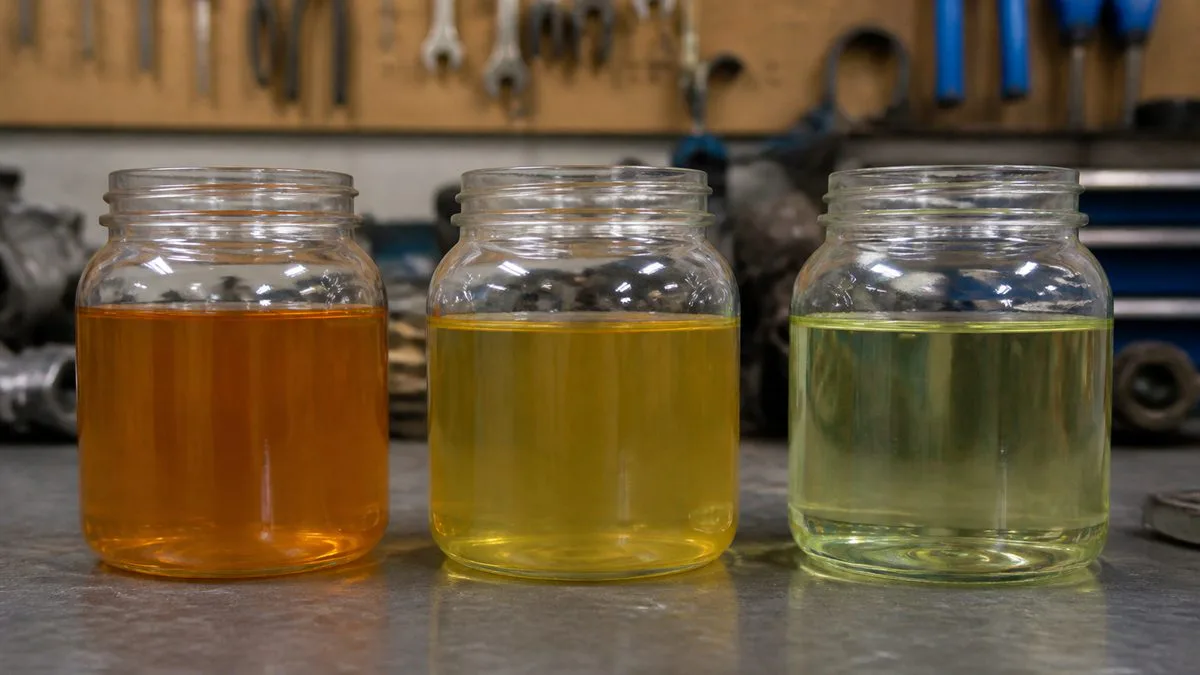
Base-oil type affects price and performance, but it does not decide compatibility by itself.
| Oil type | Main advantages | Limitations | Common applications |
|---|---|---|---|
| Mineral | Affordable and suitable for certain basic or older engines | May produce more smoke and deposits | Vintage or basic equipment when specified |
| Semi-synthetic | Good balance of price, cleanliness, and protection | May not suit the most severe racing conditions | Landscaping equipment and general use |
| Full synthetic | Strong thermal stability, low deposits, and good cold flow | Higher cost; specification must still match | Professional, high-output, or oil-injected engines |
| Synthetic ester racing oil | Strong film strength under severe heat and load | May be unsuitable for light use or some injection systems | Approved motocross and racing applications |
| Castor-based oil | Strong lubricating film under racing conditions | May contribute to varnish, gum, or deposits | Specialized racing engines |
| TC-W3 marine oil | Formulated for water-cooled marine operation | Not automatically suitable for hot air-cooled tools | Outboards and specified marine engines |
Is synthetic two-stroke oil better?
Full synthetic oil often offers good thermal stability, clean combustion, and low-temperature flow. Those benefits can matter in professional equipment, high-output engines, and oil-injection systems. However, “synthetic” does not automatically mean suitable. An expensive full-synthetic marine lubricant can still be wrong for a chainsaw that requires an air-cooled JASO FD product. A premix-only ester racing oil may also be unsuitable for an injection pump. Semi-synthetic oil is often the practical middle ground for homeowners and commercial landscapers. It can provide strong cleanliness and protection without the cost or specialized operating needs of racing formulations.
Where castor oil fits
Castor-based oils are valued in some racing applications for their strong oil film under severe heat. Their limitations include potential varnish, gum, deposits, and storage concerns. They are not automatically the best choice for equipment that idles frequently, runs at moderate temperature, or sits with mixed fuel for long periods.
Best Two Stroke Oil by Application

A useful comparison ranks requirements rather than forcing unrelated engines into one product list.
Chainsaws, trimmers, and leaf blowers
For modern air-cooled outdoor power equipment, prioritize:
- The exact specification in the operator’s manual
- JASO FD and ISO-L-EGD where required
- Good gasoline miscibility
- Low exhaust and piston deposits
- Reliable film strength at high engine speed
- Packaging that supports accurate measurement
- Fuel stabilizer if appropriate for your storage habits Products such as ECHO Red Armor, ECHO PowerBlend Gold, STIHL HP Ultra, and Husqvarna XP+ are common candidates within their intended applications. Their names alone do not establish compatibility. Check the current label because formulations and regional specifications can change. Professional crews should also consider supply consistency and packaging. A theoretically superior oil is not very useful if workers cannot measure it accurately or obtain the same product reliably. The best two-cycle oil for chainsaws and trimmers is different from bar-and-chain oil. Premix oil lubricates the engine after being combined with gasoline. Bar oil belongs in a separate reservoir and lubricates the guide bar and cutting chain. Never substitute one for the other.
Commercial landscaping
Landscaping equipment may run for hours under heat, dust, and changing throttle. A suitable oil should help control exhaust-port, piston, and spark-arrestor deposits while maintaining lubrication under sustained load. Convenience also affects real-world results. Premeasured bottles reduce ratio errors, while graduated containers can lower the cost per mixed gallon for larger crews. If mixed fuel is stored, follow the shortest storage limit stated by the gasoline, oil, stabilizer, and equipment manufacturers.
Dirt bikes and motocross engines
The best two-stroke oil for a dirt bike depends on how the bike is used. High-RPM motocross racing can favor an approved synthetic ester or specialized racing premix with strong film strength and power-valve deposit control. Motul 800, Maxima Castor 927, Maxima Formula K2, AMSOIL Dominator, Bel-Ray H1R, and similar products are often considered for demanding premix applications. Trail and enduro riding may involve lower exhaust temperature, long idle periods, and frequent throttle changes. An oil that performs well during wide-open racing may not burn as cleanly during slow technical riding. Products designed for variable-load use or injection compatibility can be more suitable. Always check whether the product is:
- Premix only
- Suitable for oil injection
- Approved for both systems
- Compatible with the required mixing ratio
- Appropriate for the engine’s power valve Do not copy another rider’s ratio. Jetting, altitude, fuel, temperature, engine modifications, oil choice, and riding style can all affect performance.
Scooters, mopeds, and oil-injected motorcycles
An oil-injected engine draws lubricant from a separate reservoir. The oil must flow through small lines and a metering pump, including during cold starts. Use an injector-safe product with the specified viscosity and low-temperature performance. Do not place thick premix-only racing oil in the reservoir unless the manufacturer explicitly approves it. Oil injection also does not normally require adding a full premix dose to the gasoline. Doing both can lead to excessive oil, smoke, deposits, and poor running. Special break-in or priming procedures are exceptions and must come from model-specific instructions.
Water-cooled outboards
For many conventional two-stroke outboards, the starting point is a registered NMMA TC-W3 oil. Common marine brands include Quicksilver, Pennzoil Marine, Yamalube, and manufacturer-specific products. Direct-injection outboards can have narrower requirements than older carbureted models. Evinrude XD50 or XD100, for example, may be associated with particular Evinrude operating modes. Other manufacturers have their own direct-injection formulations. Do not assume that every TC-W3 product is interchangeable in every direct-injection outboard. Check the manual and current engine configuration.
Vintage engines
An older engine may require a particular oil type or richer fuel-to-oil ratio because of its bearing design and original lubrication needs. Modern oil technology does not automatically authorize changing 24:1, 32:1, or another specified ratio to 50:1 or 100:1. Use reliable model-specific documentation. If the original recommendation is obsolete or ambiguous, consult a technician or specialist familiar with that engine family.
Occasional-use equipment
For a machine used only a few times per year, convenience and fuel freshness may matter more than buying a large bottle of racing oil. Premeasured oil or manufacturer-approved canned premix can reduce calculation errors and leftover fuel. Canned fuel usually costs more per liter or gallon, but its controlled formulation and packaging can be useful for emergency equipment, seasonal tools, or owners who consume very little fuel.
Premix Oil vs. Injector Oil
Premix oil is measured directly into gasoline before the fuel enters the engine. Injector oil is stored separately and delivered through an oil pump or autolube system. Some products work in both systems. Others are marked premix only or specifically designed for injection. Important differences can include viscosity, cold-flow performance, and the way the oil disperses through gasoline. Before buying, ask:
- Does the engine use premix or injection?
- Is the product approved for that lubrication method?
- Does it meet the required performance standard?
- Does the label support the required operating temperature?
- Is the oil appropriate for the specified ratio?
- Does the engine require a specific OEM formulation? A separate oil tank usually indicates automatic injection, but it does not prove the system is functioning. Low-oil warnings, hoses, filters, pumps, and priming procedures must be maintained according to the service information.
Oil Selection and Mixing Ratio Are Separate Decisions

A better oil does not give the owner permission to change the engine’s ratio. If the manual calls for 50:1, use 50:1 unless authorized documentation specifies otherwise. Some specialty oil manufacturers promote alternative ratios for their own products. Those claims apply to the oil maker’s intended applications and do not necessarily override equipment warranty requirements. Changing from 50:1 to 40:1 adds more oil but also reduces the proportion of gasoline passing through the carburetor jet. Depending on the engine, this can influence combustion, deposits, smoke, and tuning. Using too little oil increases the risk of piston scoring, bearing damage, and seizure. Measure accurately in an approved container and label the fuel with its ratio, oil type, and mixing date. Never rely on oil color because dyes vary among products.
What to Compare Before Buying
Ignore broad labels such as “premium” until the technical requirements have been checked.
1. Verified specifications
Look for the standard required by the engine. Distinguish between officially certified or registered products and general statements that an oil “meets” a specification.
2. Premix or injection compatibility
A high-quality premix oil can still be wrong for an injection pump. Look for clear application instructions.
3. Operating conditions
High-RPM racing, commercial landscaping, cold-weather injection, extended trolling, and occasional homeowner use place different demands on oil.
4. Deposit and smoke control
Low deposits can help maintain piston-ring movement, power-valve operation, exhaust flow, and spark-arrestor cleanliness. Low visible smoke is desirable, but smoke alone does not measure wear protection.
5. Package size and measurement
Premeasured bottles simplify a one-gallon or five-liter mix. Larger containers may offer better value for frequent users but require a reliable graduated measure.
6. Cost per mixed quantity
Price per bottle can be misleading when concentrations, package sizes, and recommended ratios differ. Compare the cost per mixed gallon or liter while keeping the specified ratio unchanged.
7. Availability and support
A product with clear documentation and consistent local availability may be more practical than a specialized oil that is difficult to replace.
Common Two-Stroke Oil Mistakes
Avoid these frequent errors:
- Choosing oil by brand popularity rather than specification
- Using TC-W3 marine oil in an air-cooled engine without approval
- Using air-cooled oil in an outboard that requires TC-W3
- Putting bar-and-chain oil in premixed fuel
- Using automotive four-stroke motor oil as premix
- Confusing motorcycle transmission oil with engine premix oil
- Adding premix to a normally functioning oil-injected engine
- Changing the specified ratio because the oil is synthetic
- Measuring oil by sight
- Keeping unidentified mixed fuel
- Assuming heavy smoke always means the oil is poor
- Running old or water-contaminated fuel because it contains stabilizer Excessive smoke may come from too much oil, low engine temperature, rich carburetion, worn components, stale fuel, or an unsuitable formulation. Spark plug fouling and oily exhaust residue also require proper diagnosis rather than an immediate brand change.
Switching Between Two-Stroke Oil Brands
Changing brands is normally straightforward when both products are approved for the same engine and lubrication method. Still, a careful transition avoids uncertainty.
- Verify the new oil’s specifications and application.
- Avoid combining large quantities of oils with unknown formulations.
- Use up or safely remove old premix where practical.
- Label the new fuel batch clearly.
- Never let an oil-injection reservoir or supply line run dry.
- If contamination is suspected, have the tank and lines inspected.
- Follow the model-specific priming or bleeding procedure after oil-system service. A small residual amount of compatible oil is different from deliberately mixing several products. If compatibility is unclear, consult the manufacturers rather than experimenting.
Frequently Asked Questions
What is the best two-stroke oil?
The right choice meets the engine’s required certification, supports premix or oil injection as needed, and suits its cooling system and operating load. JASO FD or ISO-L-EGD may suit many air-cooled tools, while water-cooled outboards commonly require TC-W3.
Is synthetic two-stroke oil better?
Synthetic oil often provides strong thermal stability, low-temperature flow, and deposit control. It is not automatically better for every engine. The product must still match the required standard, ratio, lubrication system, and operating conditions.
What does JASO FD mean?
JASO FD is a two-stroke oil performance category covering lubrication, smoke, exhaust-system blocking, and detergency. FD has stronger detergency requirements than JASO FC. It is relevant to many modern air-cooled engines but does not replace marine TC-W3 requirements.
Can marine two-stroke oil be used in a chainsaw?
Not automatically. TC-W3 marine oil is formulated for water-cooled engines, while a chainsaw may require JASO FD or ISO-L-EGD oil for hotter air-cooled operation. Use marine oil only if the chainsaw manufacturer explicitly permits it.
Can premix oil be used in an oil-injected engine?
Only if its label and the engine manufacturer approve injection use. Some premix-only racing oils may be too viscous or otherwise unsuitable for the pump. An incompatible product can restrict oil delivery, especially in cold conditions.
Does the two-stroke oil brand matter?
Specifications and compatibility matter more than the logo. OEM oil can simplify selection and warranty documentation, while a properly approved aftermarket product may also work. Compare verified standards, intended use, and current manufacturer instructions.
Can synthetic and mineral two-stroke oils be mixed?
Some compatible products may tolerate limited mixing, but combining oils with unknown additive systems is unnecessary. During a brand change, use up or remove the old oil where practical. Never let an injection system run dry during the transition.
How long does two-stroke oil last?
Unopened and opened shelf life varies by formulation, packaging, heat, moisture, and manufacturer guidance. Store oil tightly sealed in its original container. Mixed gasoline usually has a shorter usable life than oil stored by itself, so follow the fuel and oil instructions separately.
Choose by Specification, Not Hype
The best two stroke oil is not simply the most expensive bottle or the product with the most enthusiastic reviews. It is the oil that matches the engine’s cooling method, lubrication system, certification, fuel ratio, and workload. Start with the operator’s manual. Confirm whether the machine requires JASO FD, ISO-L-EGD, TC-W3, or a specific OEM formulation. Then compare base-oil type, injection compatibility, deposit control, packaging, and cost per mixed quantity. That process produces a safer choice than applying one racing, marine, or outdoor-power-equipment oil to every two-stroke engine. Two-stroke oil requirements vary by engine, lubrication system, and operating conditions. Use the oil specification and mixing ratio listed in the equipment’s current operator’s manual.
Mix with confidence
Calculate your exact oil amount
Choose your fuel volume and required ratio to get a precise premix measurement in US or metric units.
Open the mixing calculatorAbout the author


Oil for Two Stroke Engines: How to Choose the Right Type
Learn how to choose oil for two stroke engines by application, oiling system, certification, formulation, and the manufacturer’s required mix ratio.
Read article
2 Stroke Dirt Bike Oil: Selection, Premix, and Ratio Guide
Choose the correct 2 stroke dirt bike oil for premix or injection, understand key standards, calculate ratios, and prevent common lubrication mistakes.
Read article
2 Cycle vs 2 Stroke: Engines, Oil, and Fuel Explained
Compare 2 cycle vs 2 stroke engines and oils. Learn why the terms are interchangeable and how to choose the correct oil, standard, and fuel ratio.
Read article